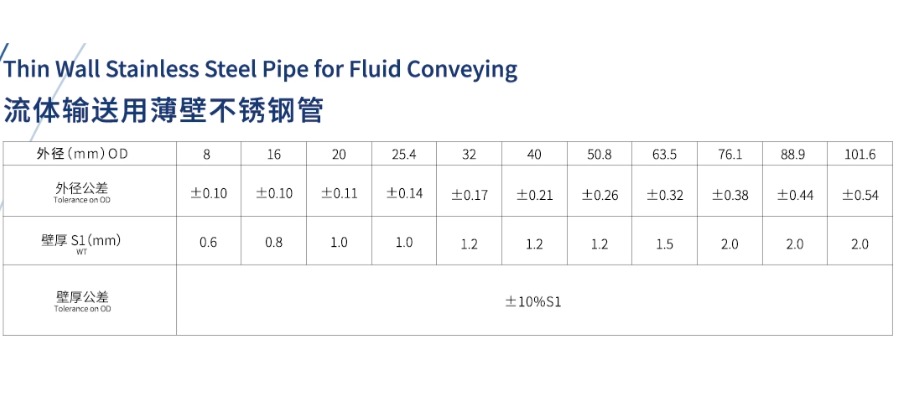
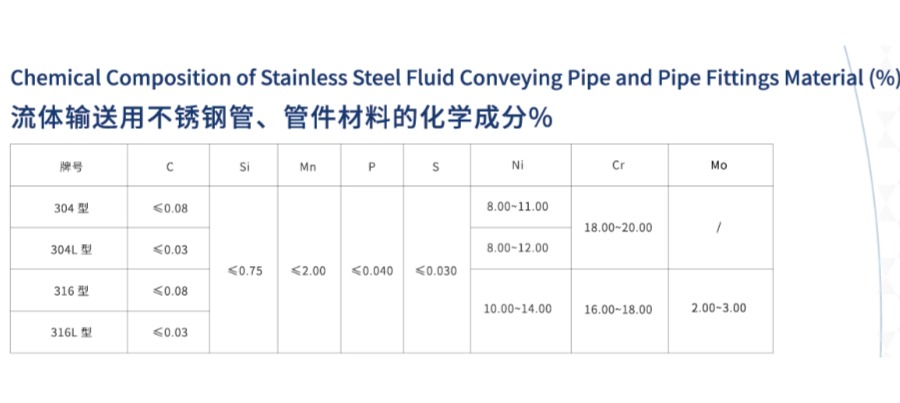
GB/T 19228 Series: Seamless and welded stainless steel pipes and fittings (Grade I, Grade II) European Standard (EN10312): Stainless steel pipes and fittings GB/T 12771 2019: Standard for stainless steel welded pipes CJ/T 152 Series: Press and grooved fittings GB/T 12459 Series: Butt-welding stainless steel pipe fittings GB/T 33926 Series: Ring-pressed fittings China national standard (GB) socket welding series fittings Material Selection The materials we use for our pipes include 304, 304L, and 316L, and we can also process materials based on customized specifications.
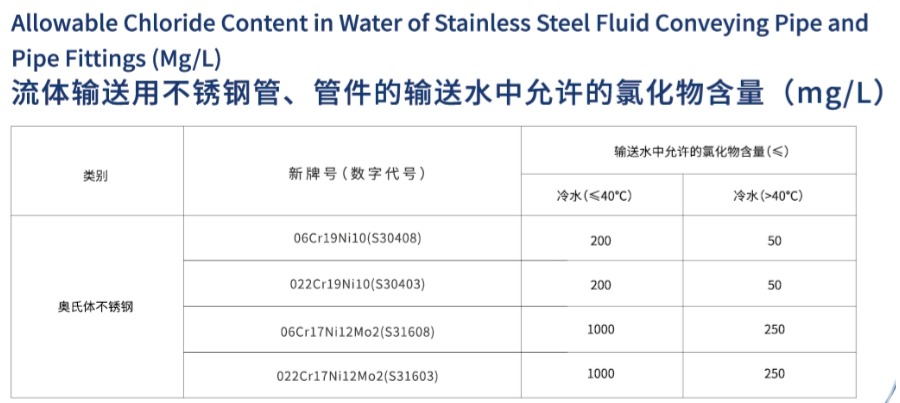
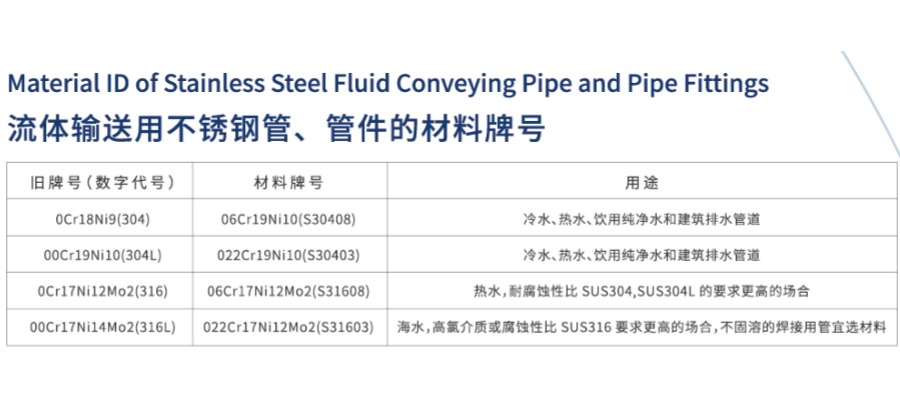
Sealing Material Requirements Sealing materials are the key to the service life of water pipes. The service life of sealing materials determines the service life of the pipeline system. Meeting the requirements of the "National Standard" is the key to controlling sealing materials. Standard Reference: EN681-1:1998 standard Material selection: Chlorobutyl and EPDM rubber are recommended Additional items: Compressive permanent deformation for 24 hours at 125°C; underwater compressive permanent deformation Inspection items: 70 days at 110°C; changes in volume in water, etc. Improvement items: Hot air aging; changes in volume in water, etc. Stainless Steel Material Grade Generally, austenitic stainless steel Ocr18Ni9 (304) is used. For areas with high requirements for corrosion resistance, austenitic stainless steel Ocr17Ni12Mo2 (316) or Ocr17Ni14Mo2 (316L) is preferred. Sealing material grades: Chlorobutyl rubber (CIIR), Ethylene-Propylene-Diene Monomer rubber (EPDM), and Fluorocarbon rubber (FPM).
Advantage
Economical and Practical
High Efficiency Usage
The service life of stainless steel pipes can last up to 100 years.
Easy Installation and Maintenance
Stainless steel pipes are easy and safe to operate, with quick construction.
Heaith and Environmental Protection
Strong Corrosion Resistance
The pipes undergo a solid solution treatment as a whole, which can prevent water quality issues caused by corrosion.
High Hygiene Performance
Stainless steel material is a healthy
Safe and Reliable
Strong Tensile Strength
The tensile strength is 8-10 times that of PP-R pipes.
Low Thermal Conductivity
The thermal conductivity is one-fifth of copper's.